
Dental Articles - Edmonton
7 Types of Dental Braces and Which One Is Best
Posted by Floss & Gloss Dental on Friday, 26 June 2026
Are you trying to choose the right braces for a straighter and healthier smile? With so many options available today, it can be hard to know which one is best for you. A complete guide to choosing the right dental braces can help you understand which type fits your teeth, comfort, and lifestyle. Each type of braces works differently, and the best choice depends on how much your teeth need to be straightened and what results you want.
Braces are not only about appearance. They also help improve bite function, chewing ability, and long-term oral health. This is why selecting the right option requires proper understanding and professional advice.
How are Braces Treated?
Before starting orthodontic care, a proper dental check-up is always needed. A dentist near you evaluates the teeth, jaw position, bite alignment, and overall oral health. This helps in understanding what type of braces will work best for each case.
The planning stage may include digital scans, X-rays, and bite analysis. These tools help create a clear treatment plan, so teeth move safely and effectively over time. Regular follow-ups are also part of the process to ensure progress stays on track and to make adjustments when needed.
7 Types of Dental Braces Explained in Simple Terms
There are several types of dental braces near you available today, each designed for different needs and preferences. Understanding these options makes it easier to decide what suits a person best.
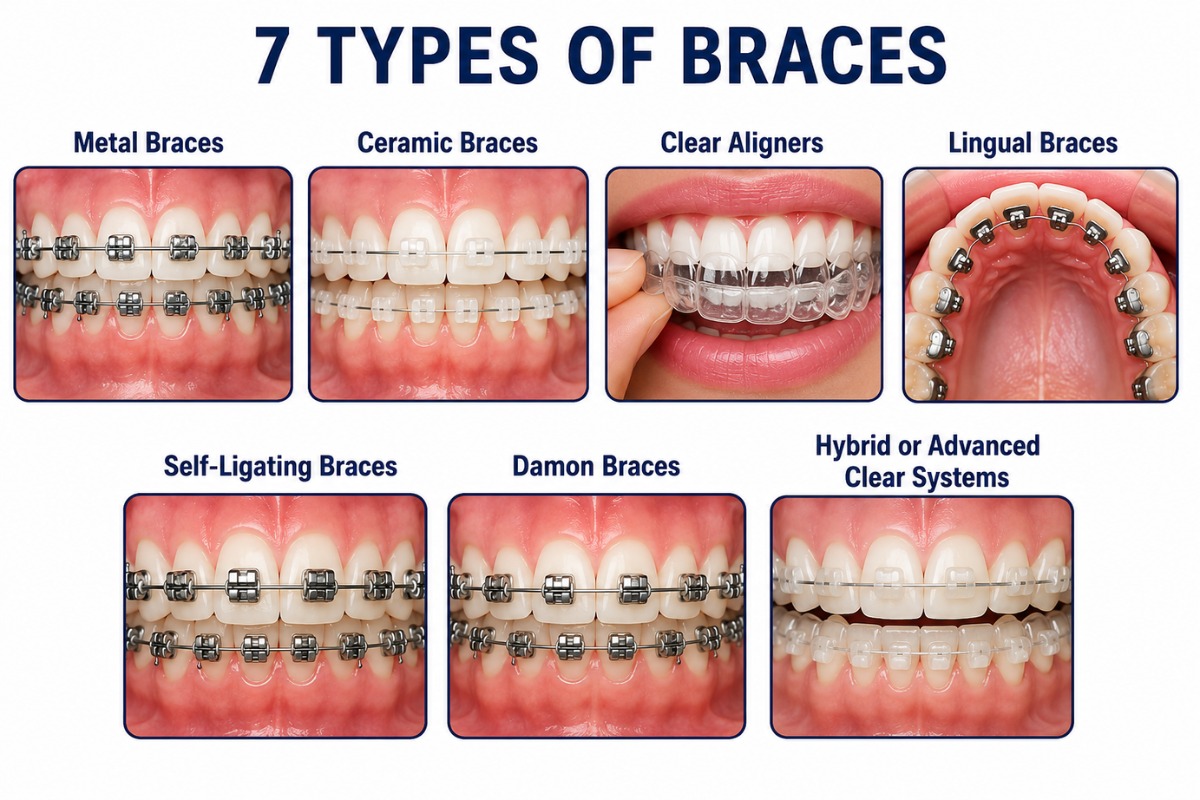
1. Metal Braces
Metal braces are the most common and safest option. Strong metal wires and brackets are used to construct the gears. In this way, they reposition teeth. Due to their efficiency in correcting complex alignment issues, they are often recommended for long-term use.
2. Ceramic Braces
Ceramic braces work the same way as metal braces but use tooth-coloured or clear brackets. This makes them less noticeable, which is why they are often preferred by people who want a more natural look during treatment.
3. Clear aligners
Clear aligners are removable trays that slowly shift teeth into place. They are nearly invisible and easy to clean. These are commonly used for mild to moderate alignment issues and are popular among adults and teens.
4. Lingual braces
Lingual braces are fixed behind the teeth, making them invisible from the front. They are custom-made for each patient but may take time to adjust to because they sit close to the tongue.
5. Self-ligating Braces
These braces use a special clip system instead of elastic bands. This reduces friction and may make adjustments more comfortable. They can also reduce the number of dental visits needed during treatment.
6. Damon Braces
Damon braces are a contemporary kind of self-ligating brace. They use light pressure on teeth and are designed to move teeth more naturally. Compared to conventional braces, many patients find them comfortable.
7. Hybrid or Advanced Clear Systems
Some modern systems combine different materials and techniques to improve comfort and appearance. These are designed based on specific patient needs and are often recommended after a detailed dental evaluation.
How to Choose the Best Braces for Your Teeth
The most suitable braces for your teeth will depend on many factors. Since different types work for different people, the choice depends on your dental condition and personal preference.
Key factors include.
- Density of the crowd or space.
- Misalignment of teeth.
- Age and oral health status.
- Preference for comfort and appearance.
- Length of treatment.
- Spending and living practices.
Assessment ensures the selected braces deliver safe, effective results without unnecessary discomfort.
Dental care and Orthodontic Support in South Edmonton
People can get a complete assessment, treatment planning and monitoring in a dental clinic in South Edmonton. It guarantees that the teeth move safely and correctly throughout.
Before any recommendation for braces, the case is thoroughly studied. Likewise, our staff monitors your child's progress through regular visits. With ongoing guidance from our dentists, the treatment is effective and comfortable.
Why Choosing the Right Braces Matters
Selecting the right braces is not just about straight teeth. It also affects:
- Treatment speed
- Comfort during daily life
- Oral hygiene maintenance
- Long-term dental health
- Final smile results
The right choice can make the entire treatment smoother and more predictable.
Benefits of Braces Treatment
Braces offer long-term improvements beyond appearance. Some key benefits include:
- Better alignment of teeth
- Improved bite and chewing ability
- Easier cleaning and oral hygiene
- Reduced risk of tooth wear
- Increased smile confidence
These improvements help support better oral health for years.
Start Your Journey to a Straighter Smile Today!
Are you ready to begin your journey toward a straighter, healthier smile? For expert guidance, evaluation, and assessment, and personalized care designed for safe, effective, and long-lasting results, book a consultation today to discover the right option for you at Floss and Gloss Dental.